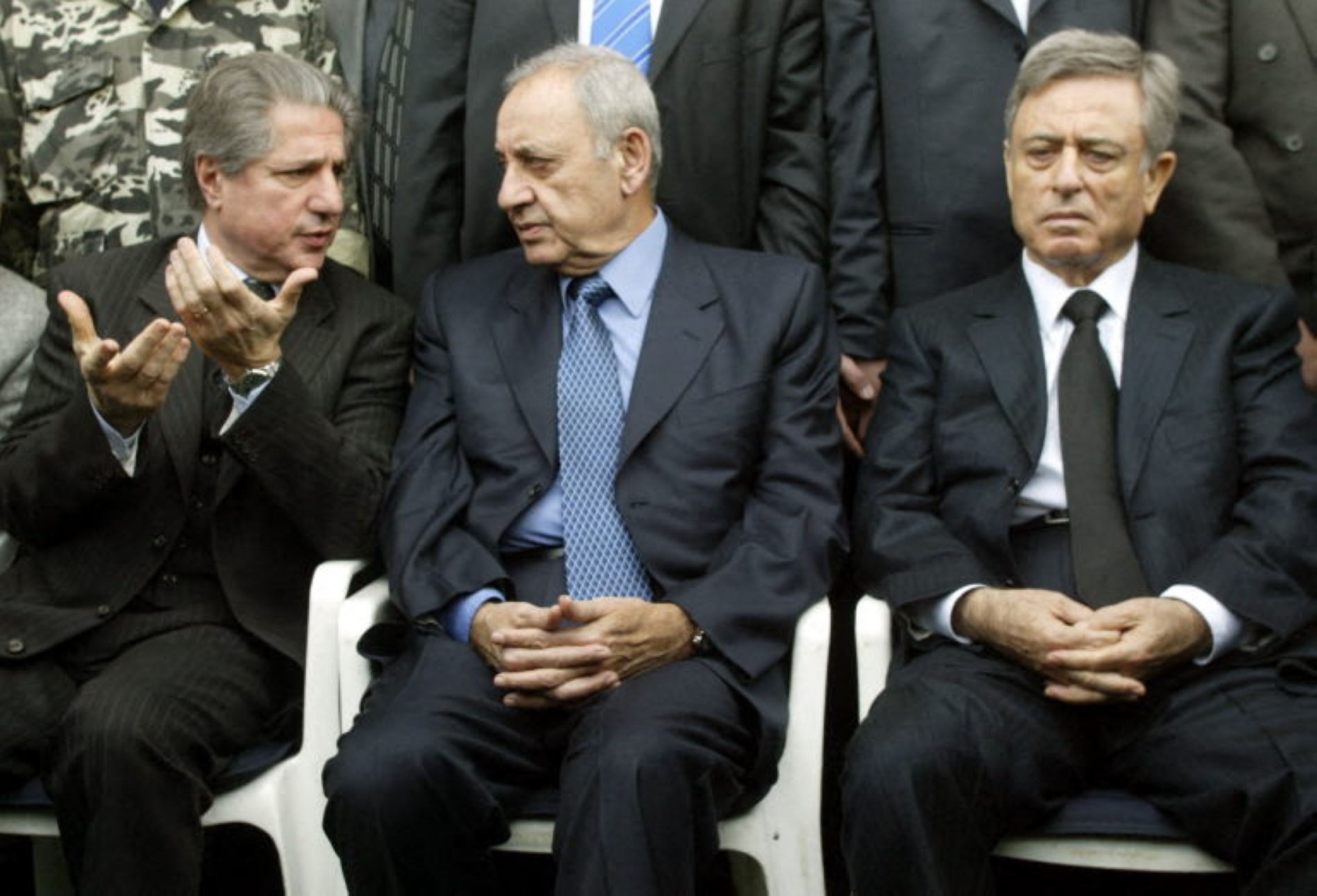
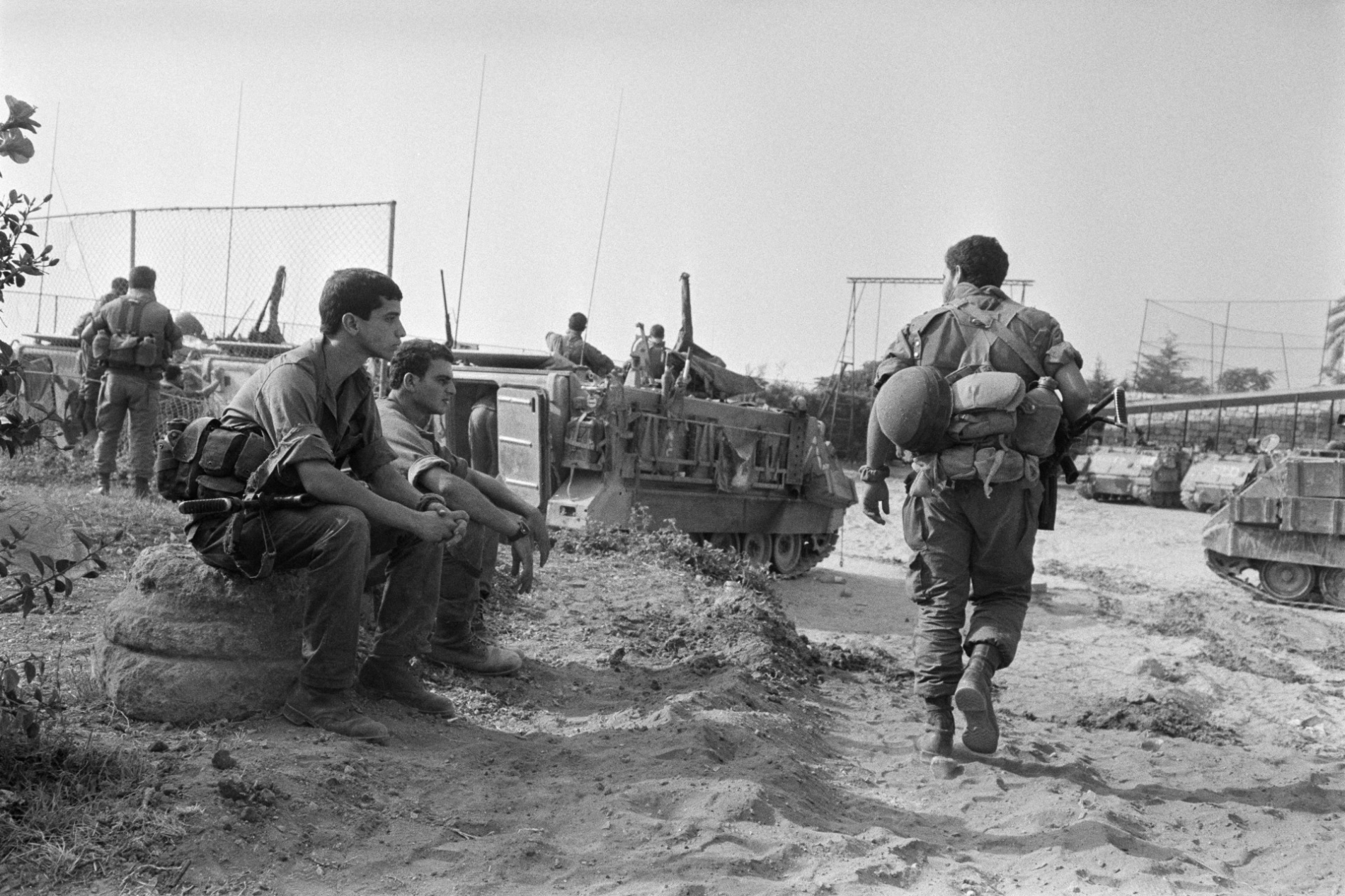
How President Gemayel Rejected a Declaration of Principles with Israel Despite U.S. Pressure… Sheikh Pierre: Amin’s Intransigence Stems from His Fear of Being Unable to Find a Successor to Shafic al-Wazzan
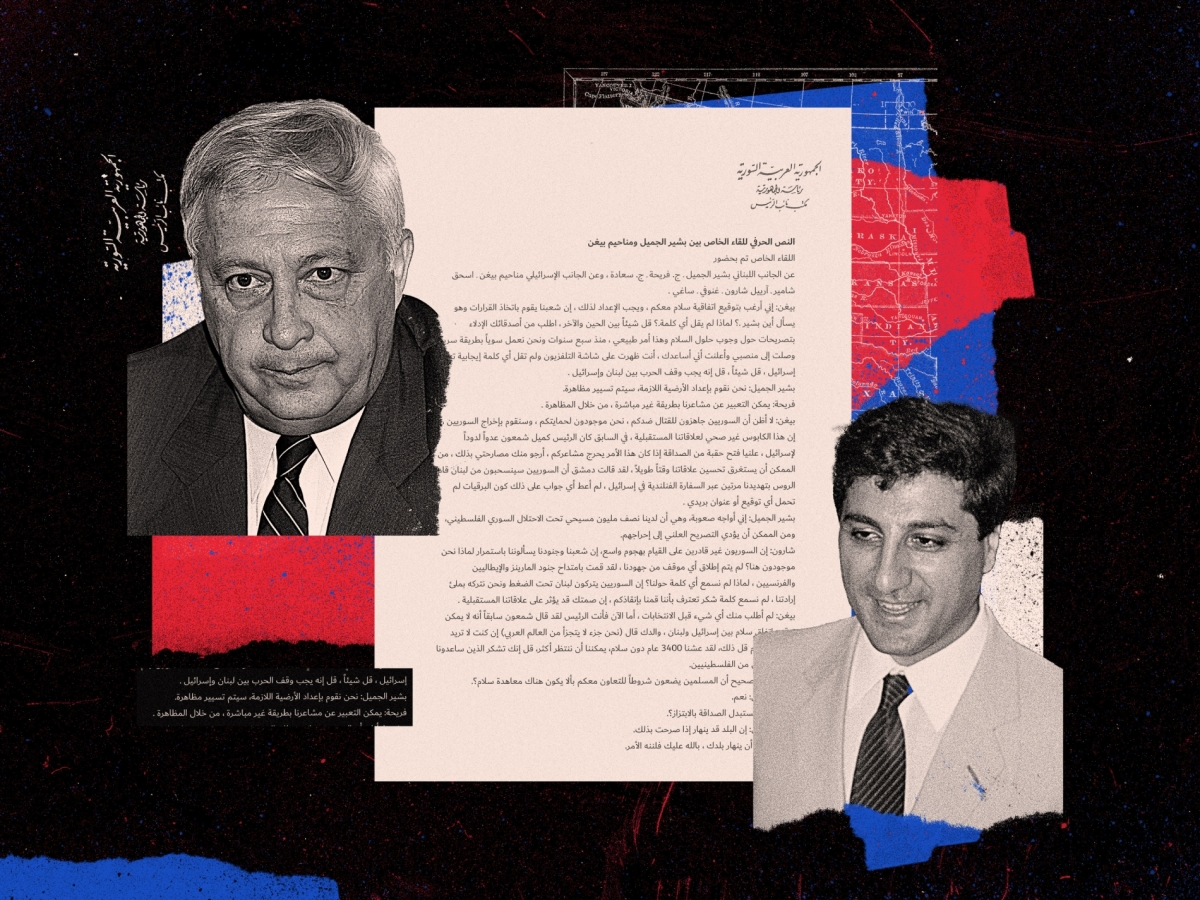
Sharon: With this paper, we reached an agreement, and everything was supposed to be concluded quickly. After that, Amin said that he no longer accepted it following the Americans’ intervention. We are not against them, and we want them to participate, but not to replace direct communication, because through the Americans we cannot reach a result. We are now under American pressure to withdraw from Lebanon—heavy pressure to withdraw even without reaching any agreement or security arrangements. Without such an agreement, we will not withdraw. This was a preliminary understanding during Sheikh Bashir’s time, but the Americans want us to withdraw even without the security agreement.
There is also pressure on the government from the Israeli public, because they do not understand our relationship with the Lebanese state. After liberating Lebanon from the terrorists and turning it into a sovereign country, why this attitude toward us? Why this attitude in the negotiations? Why is there no free expression of opinion? This is why there is pressure to leave everything behind and go.
Our only concern is to have a normal relationship with a free Lebanon, cleansed of terrorists. We do not want a single drop of water from Lebanon. (He presented the Israeli government decision issued on December 11, 1982, which was handed to the Americans and President Amin at the same moment.) After this, we established contact with President Amin, and I came to Beirut to establish direct or indirect contact with the president, so that we could reach the December 14 paper. This was the fifth paper, which went beyond what we had prepared for President Amin, and there is a small possibility of working on this paper and reaching an agreement.
Pierre Gemayel: You said there was an almost formal agreement that was not implemented. Give me an example.
Mandy: On almost everything.
Pierre Gemayel: What was the main point that you agreed to in the paper but that was not reached in the negotiations?
Mandy: Normalization.
Pierre Gemayel: You agreed to that in the paper, but it was not reached in the negotiations? In any case, leave that aside. There is the political aspect and the national aspect. We have the same problems historically as you do. Perhaps it is the same as yours: you Jews, in this world, felt that you were strangers, and therefore you made every effort to return through your faith. Faith can move mountains. You achieved your goal. Why did you work for two thousand years to return? Because wherever you were, you felt like strangers. We have the same problem—we live among 140 million.
Sharon: So do we.
Pierre Gemayel: I know, and that is why I am speaking from a national perspective. I do not want to go back 6,000 years, but rather 400 years. We were part of the Ottoman Empire, meaning that every citizen who was not Sunni was considered a second-class citizen. We succeeded in turning our country into a refuge of freedom, and we came to live here so that we could be free. We succeeded in turning our mountain into a refuge for all the persecuted. It became a country where Jews, Muslims, Christians, atheists—all communities—felt that they were free in their own country.
The Muslims were driven by Islamic zeal. They wanted to attack the Jews, but we took to the streets not to defend the Jews, but to defend freedom. We share the same conviction as you: to live freely throughout the Arab world. Which Jew or Christian feels that he is in his own country? Even in Israel, which is the most democratic, does a Christian feel that he is as much at home as a Jew? In a communist country, does he feel that way? No. Only Lebanon has this character. Just as we gave the world the alphabet, we are giving it this model of freedom.
Please understand me well. During this period, from 1943 to 1958, we made a tremendous effort to develop our political system. You should know that Lebanon is the only country with this formula. You are Jews, and in Syria they are Muslims, and you can have one common view. Here, we succeeded in building a country of freedom. Did we succeed? I do not know. But between 1943 and 1958, we succeeded, because Muslims began to appreciate the importance of this formula.
Then the Palestinians came to us. They arrived as refugees, but after some time they became the owners of the house. The Muslims helped them, and these Palestinians, instead of working for Palestine, became a fifth column for everything foreign. This is what brought us to where we are today. It turned Lebanon—a small country—into a problem.
Then came this war between the Arabs and Israel. We wanted to remain outside this war. You occupied territories in Syria, Egypt, and Jordan, while we kept our territory free because we did not want war.
Sharon: We made peace with Egypt and returned their territory to them.
Pierre Gemayel: We did not declare war on anyone—not on Israel and not on the Arabs. There is a moral conflict between Israel and the Arabs, and we, situated in this area between the two, did not declare war either on you or on the Arabs. Do not force us to fight the Arabs.
Sharon: We gained nothing from Lebanon, and we want nothing from Lebanon.
Pierre Gemayel: Help us remain your friends and not become enemies of either you or the Arabs. Our war was against the Palestinians for eight years. We fought the Palestinians in your place, while the whole world abandoned us, because no one dared to touch this problem that was here. You came with a purpose and with your legitimate right to self-defense. We tried to persuade the Palestinians not to act against you from here, but we failed. When you came, I was certain that you would finish the matter within five days.
Lebanon is not the enemy of anyone. It wants peace with you and with the Arabs—not peace with you and war with the Arabs. We ask you to help us get rid of all the outsiders here.
And now I will speak politically: Believe me, General, we want peace with the whole world, especially with Israel, because we have the same problems. Through your courage, you built this country, and of course America helped you, and England did too. You remember their support, but you have your own independent course. This is what we see today. Things are not going well between you and the Americans, but I believe the final word will be yours.
They say that Israel is an American state. I say that America is an Israeli state. There is a great service you could do for us. You cannot live forever with weapons in your hands. I feel that you are now moving closer to the Muslims among you, because sooner or later we cannot continue living as strangers in this Arab world.
Lebanon could be one of your best allies. As you see, General, we have succeeded so far. Help us so that we can help ourselves and help you, because we can serve as mediators. We are going to remain together forever. There is a life between us and you. Give us some additional time. If there are problems, give us more time. Lebanon has absolutely no interest in entering a war with Israel, nor does it have any interest in war with the Arabs.
Sharon: Thank you for what you have said. I will try, briefly, to address some of the points. With all the respect I have for you, I have never had the honor of speaking with you at length before, but I know that you like to identify the points clearly. You said that the Christians fought in Lebanon against the Palestinians.
Pierre Gemayel: What brought us here other than our war with the Palestinians? You were fighting the Arabs, and the main front was here.