Why did Menachem Begin become angry with Bashir Gemayel, and what was his response? Sharon to Bashir: “If we do not sign a peace treaty, Lebanon’s unity is at risk.”
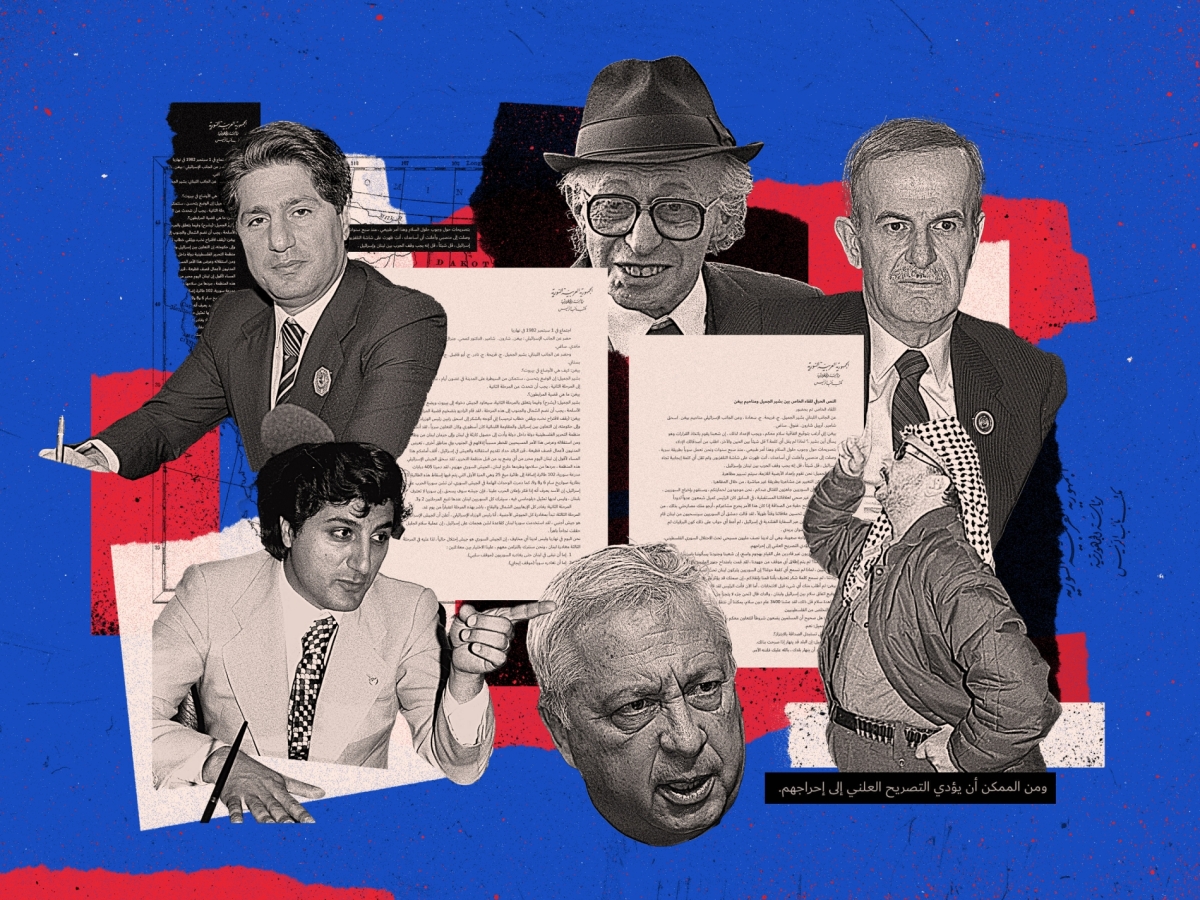
A great deal has emerged about the secret meetings held by President Bashir Gemayel, before his assassination and the election of his brother Amin, and then their father, Kataeb Party leader Pierre Gemayel, with Israeli Prime Minister Menachem Begin, Ariel Sharon, and other Israeli officials, in preparation for the signing of the May 17 Agreement in 1983.
However, secret Syrian documents obtained by Al Majalla, in the form of texts from the papers of Syrian Vice President Abdel Halim Khaddam, reveal that the Syrian regime, through its intelligence services or those of its allies—possibly the Soviet Union—was aware of the details of these secret meetings and had access to their documents and transcripts as they unfolded.
Those who read the documents encounter three overlapping layers. The first is direct political documentation, including meeting minutes, exchanged letters, and detailed texts of agreements and deliberations. The second is a political interpretation offered by Khaddam from his position as one of the most prominent Syrian decision-makers at the time, whereby every Lebanese, Israeli, or American move becomes part of a broader struggle over the region. The third is an explicit defense of Syria’s strategy in Lebanon, presenting it as a policy aimed at preventing a “winner and loser” formula, preserving Lebanon’s political formula, and “preventing Lebanon from being turned into an Israeli platform against Syria and the Arabs.”
Within these layers or levels came the moment of the “Israeli price,” which Begin clearly articulated when he met Gemayel after his election as president the previous month, in early September 1982. This was followed by the Lebanese-Israeli negotiations and the interconnected Syrian-Lebanese contacts surrounding them, and then the decisive confrontation over the May 17 Agreement, ultimately leading to its cancellation.
The Syrian documents from that period do not tell the whole story, nor do they present neutral facts. Rather, they tell it from the perspective of the Syrian regime, which sent its army into Lebanon in mid-1976, before the two Israeli invasions and the arrival in Beirut in 1982, followed by the departure of the Palestine Liberation Organization that same year and the assassination of Bashir Gemayel on September 14, just hours after his secret meeting with Sharon. It also recounts Damascus’s attempt to overturn the May 17 Agreement through domestic and foreign alliances, the records of Amin Gemayel’s contacts with Assad and their exchanged letters, and ultimately President Hafez al-Assad’s cancellation of the agreement in March 1984.
In these installments, we will present the full texts of the secret meeting minutes along with Khaddam’s comments on them. He devotes a significant portion of his papers to the expanded meeting held in Nahariya on September 1, 1982, “after the election of Bashir Gemayel as president of the republic and before his assassination on (August 22/September 14, 1982).”
Khaddam recounts that Menachem Begin “opened with a statement focusing on Israel’s assistance to Bashir Gemayel and his supporters, and the great sacrifices made to liberate Lebanon from the Palestine Liberation Organization and force the Syrian occupier to leave Lebanon, with this withdrawal to coincide with the withdrawal of the Israeli army, in implementation of the second phase of a comprehensive American plan aimed at restoring Lebanon’s sovereignty and freedom.”
According to Khaddam, Begin emphasized that the efforts made by Israeli soldiers should be crowned without waiting for anything in return, with a peace treaty with Lebanon, followed by cooperation agreements in various fields. Begin also expressed his “deep regret over the position of former President Camille Chamoun, who stated that Lebanon would not sign a peace treaty with Israel because it needed Arab support.”
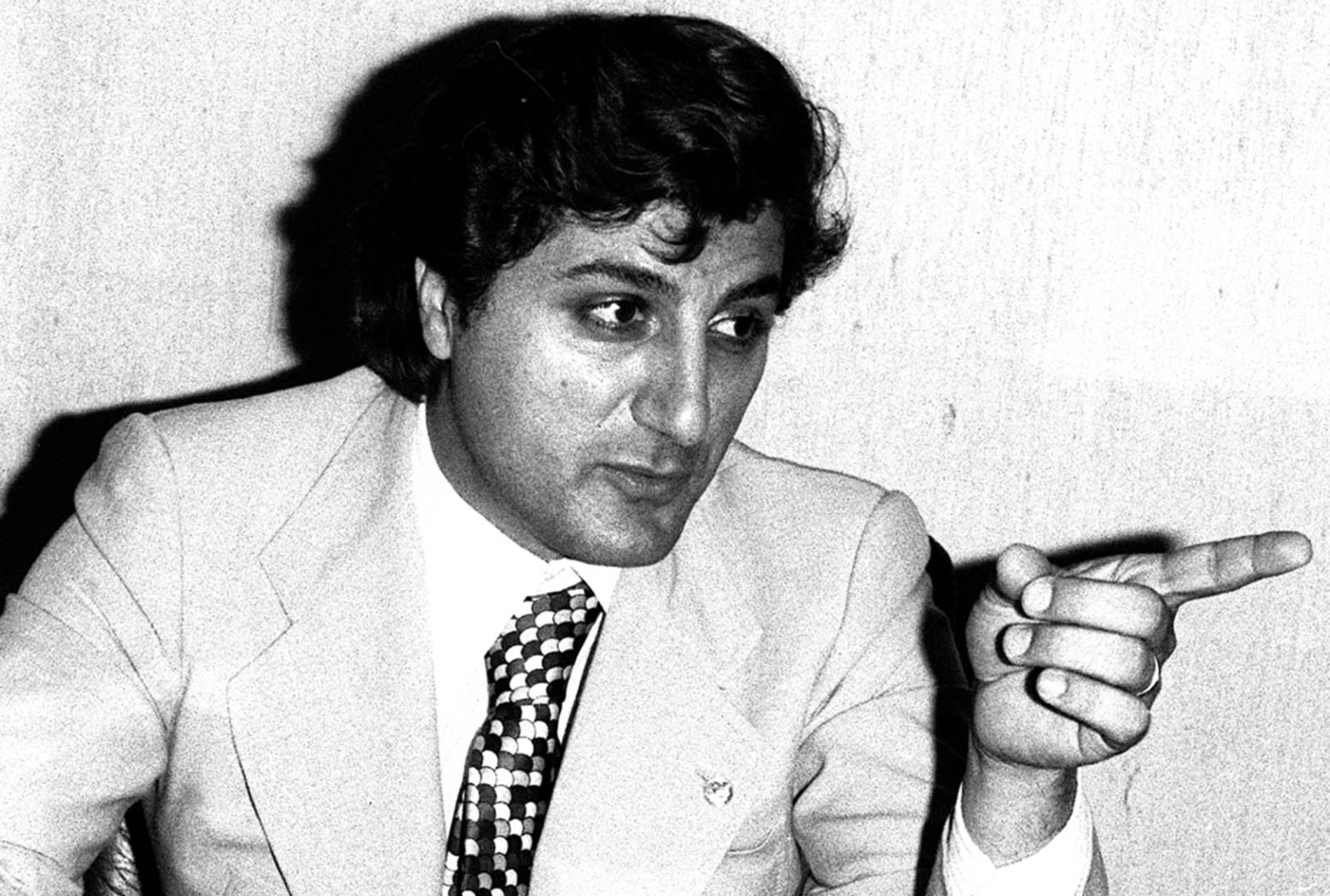
AFP
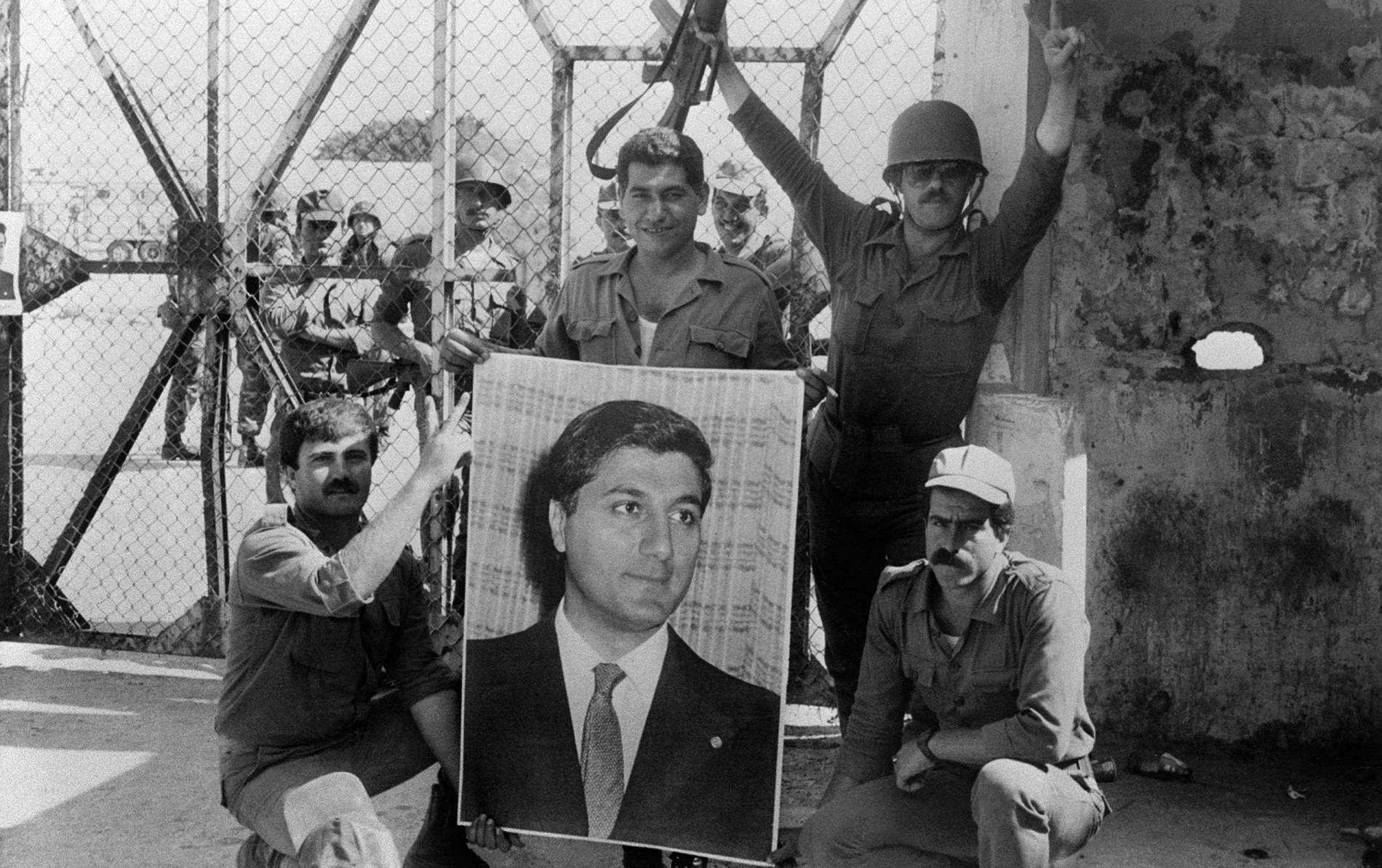
The late Lebanese President Bashir Gemayel, who was assassinated during a meeting at the headquarters of the Kataeb Party in Beirut’s Ashrafieh district on September 14, 1982.
For his part, Bashir Gemayel thanked them for the efforts and support provided by the Israeli army. He said that, as president of the republic, he would remove the Palestinian refugees from Lebanon, adding: “I was elected without owing anyone anything, and I will try to fulfill all the promises I made to my people.” He believed that negotiations should be undertaken to achieve peace. After thanking the Israeli officials, the meeting ended, followed by a secret meeting.
Here is the verbatim text of the meeting, according to Khaddam’s documents:
Meeting held on September 1, 1982, in Nahariya.
Present on the Israeli side: Begin; Sharon; Shamir; Dr. Kamhi; General Hovey (former head of the Mossad); General Tamer (responsible for preparing the peace agreement between Israel and Lebanon); Peter (formerly the second-ranking official in the Mossad and currently its director); Mandy (head of the secret diplomacy apparatus, currently an assistant to the head of the Mossad); and Sagi (former head of military intelligence).
Present on the Lebanese side: Bashir Gemayel; G. Freiha; G. Nader; G. Abu Fadel; G. Saadeh; F. Afram; and Z. Bustani.
— Begin: How is the situation in Beirut?
— Bashir Gemayel: The situation is improving. We will be able to take control of the city within a few days, after which we will move directly to the second stage. We must discuss the second stage.
— Begin: What is the issue concerning the Murabitun?
— Bashir Gemayel: (Explains.) Regarding the second stage, the army will re-enter Beirut and seize all the weapons. We must include the north and the south in this stage. The radio has exaggerated the issue of the Murabitun.
— Begin: (Stands to propose a toast and delivers a welcoming speech.) I would like to express my thanks to former Prime Minister Yitzhak Rabin and his government. The cooperation between Israel and the Lebanese Resistance was legendary and secret. The Palestine Liberation Organization established a state within a state, resulting in a catastrophe in Lebanon and depriving Lebanon of its functions and independence. This endangered the Christians and caused them humiliation in the south and elsewhere. Civilians were subjected to terrible shelling. Major Haddad decided to resign and live in Israel.
I stand before you this evening to say that Lebanon today has been liberated from any control by the Palestine Liberation Organization. The Israeli army crushed this organization, stripped it of its weapons, and expelled it from Lebanon.
The Syrian army has been defeated. We destroyed 405 Syrian armored tanks, 102 aircraft, in addition to a MiG-25—the first time such an aircraft has been shot down—21 SAM-6, SAM-8, and SAM-9 missile batteries, as well as key units of the Syrian army.
Syria will not wage war against Israel. Assad knows that if he considers declaring war on us, his army will be crushed. Syria does not recognize Lebanon and has no diplomatic representation there. All Syrians will leave Lebanon, after which Stages 2 and 3 will be implemented.
Stage Two: All the terrorists leave the north and the Bekaa Valley. Begin implementing this stage as of tomorrow.
Stage Three: This begins with the departure of all foreign armies. I am the Israeli prime minister, and I declare that the Israeli army is a foreign army. Syria has used Lebanon as a base from which to launch attacks against Israel. Operation Peace for Galilee has achieved tremendous success.
We are here today in Nahariya and have nothing to fear. The Syrian army is currently an occupying army, and therefore, in Stage Three, it must leave Lebanon, and we will leave simultaneously with it. We have to choose between two alternatives:
- Either we remain in Lebanon until the Syrians leave it (a negative approach).
- Or we leave together with them (a positive approach).
We have chosen the positive approach. We will not remain in Lebanon. We now have a relationship of friendship with Lebanon, and our soldiers must return home. The Israeli army will leave simultaneously with the Syrian army. This has been agreed upon with the United States.
The withdrawal process may take two weeks. On the first day, one Syrian unit and one Israeli unit will leave; on the following day, another unit from each side will leave, and so on.
We want to live in peace with Lebanon. When this stage is completed, there will be a sovereign, free, democratic, and independent Lebanon.
Lebanon must have a strong army equipped with various modern and advanced weapons. In light of the friendship between us, I can say that the Lebanese army must never again be divided. The officers must pledge their loyalty to the president of the republic, who is the supreme commander of the armed forces. Placing the army under civilian leadership is an important step toward democracy.
Lebanon must also have an effective internal security service (intelligence service), so that no one can take Lebanon by surprise or betray it. We are prepared to help in this area.
Begin added, addressing Gemayel: Mr. President, from 1948 until this evening, our two countries have been at war. We are friends, and yet our countries and governments are still technically at war. We must put an end to this contradiction.
Mr. President, I was hurt when I was denied recognition. Israel deserves more than that. America, France, and the others did not extend a helping hand to you. We helped you, and we want no price in return except gratitude. We did our duty.
President Chamoun stated that Lebanon would not sign a peace treaty with Israel. We did not hesitate to become involved in order to help and save you. We gave you your freedom, and our commitment came from the heart.
I was surprised when President Chamoun said there would be no peace treaty with Lebanon, without explaining the reasons. He also said that Lebanon would need Arab support. This pains me greatly. How can Lebanon be a wealthy country yet, according to Chamoun, need Arab support?
Egypt is a poor country and needs Arab support more than Lebanon does, yet a peace treaty was concluded with it. This is shameful. Must the poor remain poor? Will money control our relations?
Our relations must be based on dignity and honor. We must bring the war to an end, abolish it, and destroy it once and for all. To do that, a peace treaty must be concluded.
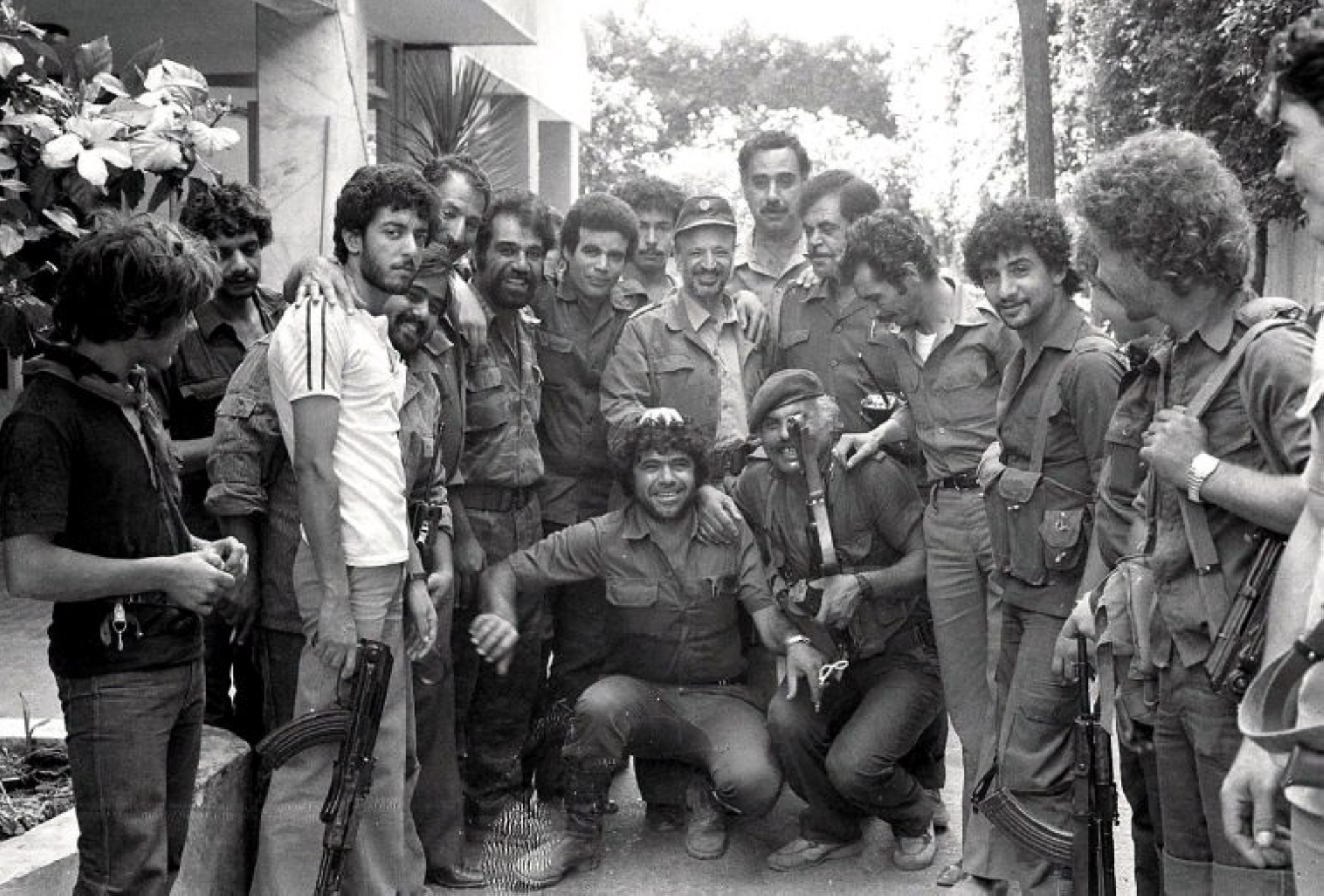
AFP
Palestinian leader Yasser Arafat (center) among his supporters in Beirut during the early days of the Israeli invasion of Lebanon in 1982.
Begin continued: We are free people, and a free country. Let us put an end to war and bloodshed. Peace for all of us. I must say that, at your request, we will sign a peace treaty in both Arabic and Hebrew—the Hebrew version in Jerusalem and the Arabic version in Beirut.
We became friends during the war. I said earlier that I regarded you as my son, and now you are president of the republic. Let our friendship have a positive impact on our two countries. We have built our relationship; let us now build economic and industrial relations. We can become prosperous countries. There is an economic union between our two countries, and we can also work together on the international stage.
This is what I expect this evening. We will achieve peace in the Middle East. Syria will not dare attack Lebanon or Israel, and Jordan does not attack us. I foresee an era of peace in the Middle East lasting 20 to 40 years, or even longer.
You may face problems, and some acts of retaliation may occur, but great achievements have been accomplished. Our enemies have been crushed. Let us thank God for everything that has been achieved. We lost 340 of our finest young men from the special forces. Their motto was “Follow me,” not “Forward, march.” Several hundred of our soldiers were wounded and disabled. We shed a great deal of blood. It was a real massacre, but a person must do what needs to be done despite the pain.
Begin added: We are happy that you, Bashir Gemayel, were democratically elected president of Lebanon. We can say that you have a friend in Jerusalem, just as I have a friend in Beirut, and that our two ancient and civilized countries have always suffered in the pursuit of freedom and independence. Let us commit ourselves to peace, freedom, and to one another.
— Bashir Gemayel: You have provided assistance at every stage to bring us to the current situation. You said you would not abandon us, and we received your assistance. We are fortunate to have your unconditional support.
Now your friend has become president of the republic. Step by step, we will begin removing 500 Palestinians from Lebanon. We will have no terrorists from now on. In the second stage, the Syrians will leave Lebanon. We do not want to equate the Syrian withdrawal with the Israeli withdrawal.
The third and fourth stages will be the normalization of the country. There is no need for normalization between our two peoples. As president of the country, I will do everything I can to realize our dreams and accomplish the task within this political framework, establishing an alliance that will serve the interests of our two peoples.
I was elected without owing anyone anything, and I will try to fulfill all the promises I made to my people. I lost my daughter, 5,000 young men, and 100,000 civilians. We must complete the peace process. We want to accomplish it ourselves. We will negotiate and overcome the difficulties to reach the right conclusions.
We have now won the war thanks to your assistance, support, and training. The combination of all these things produced remarkable results. You have been a great leader, and we must negotiate to achieve the dream of our two peoples.
We used to pray in our churches before we knew you. Now we must negotiate to achieve peace. Thank you all, gentlemen—Sharon, Shamir, Raful, the Mossad, all of you.
Once again, I hope that our Lebanon will become free and negotiate an alliance with you. You have all truly been great leaders.
The Secret Meeting
The first, open meeting ended, followed by a secret meeting. Khaddam recounts in his papers that Begin got straight to the point, expressing his strong desire to sign a peace treaty with Lebanon. He referred to domestic pressure concerning the reasons for the Israeli army’s invasion of Lebanon. Begin blamed Bashir for never mentioning the need to establish peace with Israel, or at least thanking the Israeli army for the sacrifices it had made.
Begin stressed that Israel would provide protection to Lebanon if Syria launched an attack against it. He noted that he had not asked his interlocutor for anything before the election, but that he was now president of the republic and knew what he wanted, adding that he had been deeply hurt to hear Chamoun say that Lebanon would not sign a peace agreement with Israel.
Sharon then asked Bashir Gemayel whether it was true that Lebanon’s Muslims were making cooperation with Bashir conditional on not concluding a peace treaty. Bashir confirmed this and said that announcing a peace treaty could endanger 500,000 Christians living under Syrian and Palestinian occupation. He considered that the country would collapse if the treaty were announced, while emphasizing that the objective shared by both sides was the same and that their disagreement was only over the method.
He proposed forming a four-member committee to study the issue and determine the appropriate timing, which angered Begin. Begin said that his interlocutor had to do two things: first, announce the necessity of concluding a peace treaty; and second, prepare for that treaty.
Begin refused to discuss the matter further and set September 15 as the date for concluding the treaty in Beirut.